
What do you see?
Do you see a lovely picture of a threshhold to Spring? Do you see an empty cave signifying "he is risen"? Or an architectural marvel, the arched features, steps having borne footprints for decades?


Whatever you saw, you’re right. It’s all those things. No matter your religious affiliation, or lack of same, you must admit that Easter Sunday, preceded by Maundy Thursday and Good Friday, is very much a Christian holiday. Every Christian religion, from Protestantism, Catholicism, Orthodox Christianity, and Anglicanism, celebrates Easter in one way or another to mark the day the Jesus rose from the dead.
If you are not a person of the Christian faith, that doesn’t mean you don’t celebrate a similar holiday. While Judaism does not celebrate Easter, the holiday often falls close to Passover, which commemorates the Israelites’ escape from slavery in Egypt. Some scholars see a connection between the two holidays, as the Last Supper was likely a Passover meal.

“Jesus was born Jewish, lived as a Jewish rabbi, taught from the Hebrew Scriptures, and died as a Jew. His disciples were Jewish. His earliest followers were Jewish. Christianity began as a Jewish renewal movement within first-century Judaism. Historically speaking, Jesus was Jewish. Christianity did not yet exist during his lifetime.
Why does this matter? Because forgetting Jesus’s Jewish identity distorts theology, weakens ethical leadership, and fuels harmful divisions.”
The Christian faith did not replace Judaism. It emerged from it. (So “Church Ladies” had not yet been invented.)
Yet, still today, there is tension between Judaism and Christianity. The main difference, among other lesser ones, lies in the Christian belief that Jesus was the Messiah and the Jewish belief that Jesus was a good man, but not so much a messiah. Both religions believe in one God. Christianity teaches salvation through faith in Jesus, while Judaism focuses on following the Torah and good deeds. Christians believe in the Second Coming of Christ and eternal life; Judaism has varied beliefs about the afterlife and the coming of the Messiah.
I think Christians and Jews are more alike than they are different. Just my opinion. I took one semester of World Religions in college. I remember very little of it. Perhaps now, given my advanced age, I’m “getting ready for finals” and asking more questions, reading more varied sources, thinking more.
Have you heard of Agape? A·ga·pe /äˈɡäˌpā/ Agape, originating from ancient Greek philosophy, before the birth of Christ, means “the highest form of love, charity and emphasizes altruism and compassion.” In ancient Greek literature, “agape” conveyed a sense of love characterized by goodwill, benevolence, and a focus on the well-being of others. The New Testament writers took this notion further, emphasizing that agape is not merely a fleeting emotion but a deliberate and selfless act of the will.
Agape seeks the ultimate good of the other person, even at personal cost.
It is unconditional, reflecting a commitment that persists regardless of the recipient’s response or worthiness.
AI Summary
To understand the significance of agape, consider the following points:
Agape is a selfless, unconditional love that transcends personal interests.
It fosters deep connections and empathy among individuals and communities.
Agape emphasizes altruism and compassion.
In Christianity, agape represents God’s love for humanity and is central to moral teachings.
It promotes forgiveness and reconciliation, essential for personal and societal healing.
Agape inspires acts of kindness and service, enhancing overall well-being and harmony.
I think it’s fair to say then that the ancient Greeks represented the best of what modern-day Christianity and Judaism have to offer, regarding behavior. If you’d like to know more about Socrates’ and Jesus’s comparative beliefs, knock yourself out! And now that I have provided sufficient food for thought on that subject …

Why do we associate rabbits and eggs with Easter? Just think for a minute…yes, that’s it. Rabbits are known for their prolific breeding abilities, and eggs are a fertility symbol - so there ya go. And
Rabbits symbolize fertility and rebirth, aligning with springtime themes.
The Easter Bunny tradition originated in Germany in the 1700s.
Rabbits are known for their prolific breeding, representing new life.
The association with eggs, another fertility symbol, enhances the connection.
Easter celebrations often coincide with pagan spring festivals celebrating renewal.
The playful nature of rabbits appeals to children, making them a festive icon.
From ancient Greece and Rome to Celtic Ireland and Britain, springtime frivolity manifested itself in a variety of pagan traditions; food, dancing, planting seeds to guarantee a bountiful harvest in the fall, wearing brightly colored clothing, etc. Decorating Easter eggs and participating in an Easter egg hunt are prevalent today, but started centuries ago. Historically, eggs were given up for Lent. They were hard-boiled as we do today. At Easter, they celebrate the resurrection of Christ and the end of fasting by decorating the hard-boiled eggs. Easter egg hunts originated in Germany in the 17th century. Depending on which historian you read, there are dozens of similar traditions throughout the world, most reflecting the coming of Spring and regrowth/rebirth, and of course, planting seeds for a substantial harvest.
Btw, lo, these many years, I believed that “pagan” meant “No Religion”. Or at the least, it carried a very negative, pejorative (Sodom and Gomorrah) connotation. I’m a little wrong. Out of curiosity, I looked up the definition:(especially in historical contexts) holding or constituting religious beliefs other than those of the main or recognized religions. Per Mssrs. Merriam and Webster, “The Latin source of pagan, paganus, originally meant “country dweller” or “civilian;” it was used at the end of the Roman Empire to refer to people who practiced a religion other than Christianity.” That last sentence is important as it emphasizes that the definition was applied to groups of people. However, in the last half of the 20th century, it has become self-designating, describing what we might refer to as cultish beliefs.

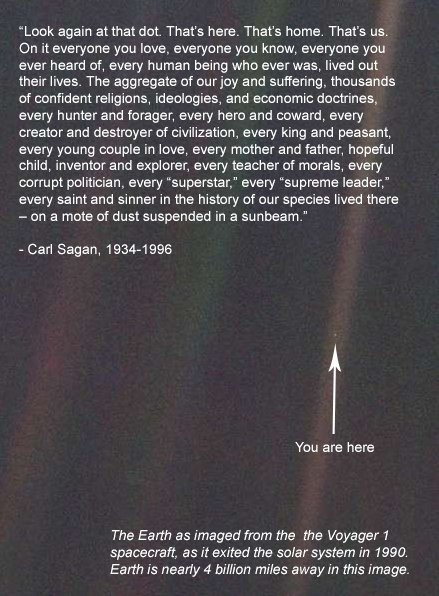
Celebrate Easter with church services, Easter egg hunts, big family dinners, or plant potatoes on Good Friday - my grandmother said that is the best day to plant potatoes. Or skip church and commune with nature, or if the weather is nice, have a barbeque. It doesn’t matter to me, but you should do what you want to do to welcome Spring, to acknowledge the season of renewal and growth. If you don’t believe in the Christian God or the Jewish God or any other god I don’t know about, you can still thank the Universe for giving mankind this earth, for today’s rain, the coming clear sunrise. Rain and sunrises don’t belong to any one group; they belong to everyone; as do the trees and wildflowers in the woods, and the stars at night, the great oceans and rivers, the streams and creeks that slice through our pastures and wild places, and the beautiful sunsets, saturated with pinks and oranges and even purples. As Carl Sagan called it, the pale blue dot
Religion and Socrates are actually quite attuned to each other, given the difference in geography and centuries. If you’ll look back to the bullet points above about Agape, mainly the following;
It promotes forgiveness and reconciliation, essential for personal and societal healing.
Agape inspires acts of kindness and service, enhancing overall well-being and harmony.
Socrates was arguably guilty of the crimes with which he was charged, impiety and corrupting the youth, because he did reject the city’s gods and he did inspire disrespect for authority among his youthful followers (though that was not his intention). He was accordingly convicted and sentenced to death by poison. He chose to go to trial rather than enter voluntary exile. In his defense speech, he rebutted some but not all elements of the charges and famously declared that "the unexamined life is not worth living." After being convicted, he could have proposed a reasonable penalty short of death but initially refused. He finally rejected an offer of escape as inconsistent with his commitment never to do wrong (escaping would show disrespect for the laws and harm the reputations of his family and friends).
That kind of behavior, facing death, “so as not to show disrespect for the law…”, is so unquestionably remarkable in today’s world. But then, in ancient Athens, it was to be expected, particularly from someone such as Socrates. He chose death, rather than show disrespect for the laws of his city-state.
I’m pretty sure mr. trump is not familiar with Socrates’ last decision - to face death, rather than showing disrespect for the laws.
I’m going to close with Carl Sagan’s “Pale Blue Dot”:
“Look again at that dot. That's here. That's home. That's us. On it everyone you love, everyone you know, everyone you ever heard of, every human being who ever was, lived out their lives. The aggregate of our joy and suffering, thousands of confident religions, ideologies, and economic doctrines, every hunter and forager, every hero and coward, every creator and destroyer of civilization, every king and peasant, every young couple in love, every mother and father, hopeful child, inventor and explorer, every teacher of morals, every corrupt politician, every "superstar," every "supreme leader," every saint and sinner in the history of our species lived there -- on a mote of dust suspended in a sunbeam.”
He ends with this: “It has been said that astronomy is a humbling and character-building experience. There is perhaps no better demonstration of the folly of human conceits than this distant image of our tiny world. To me, it underscores our responsibility to deal more kindly with one another, and to preserve and cherish the pale blue dot, the only home we've ever known.”
“…no better demonstrations of the folly of human conceits than this distant image of our tiny world. ”…deal more kindly with one another, and to preserve and cherish the pale blue dot, the only home we’ve ever known.”
I think people of all religions or of no religion can agree on that. Let’s try harder.
###
If you like, approve or agree with today’s article, please leave a comment or click on the little heart at the end. Some of you like to email me and I do appreciate that. But occasionally, I miss seeing comments or “likes” in emails. If you click on the heart, it gives me a better idea of what the majority of readers agree with or like or appreciate - or don’t like, etc.!
It’s no wonder so many religions celebrate the miraculous happenings of spring. Rebirth after a season of dormancy is so beautiful. The crabapples outside of my house right now are screaming at me: “Whatever is going on in your world, we’re going to bloom out hearts out. Care to join us?” Yes!